The Heart Behind the Machine
How Emotional Design Brings Soul to AI Creativity
By Wren Peak
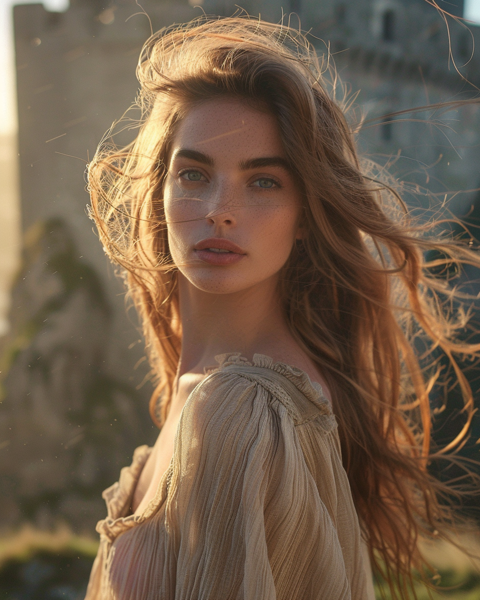
Emotionally driven design helps bring soul to AI driven creativity.
Artificial intelligence can generate images at astonishing speed.
It can mimic couture, carve architecture out of pixels, and spin entire worlds from a few lines of text.
But here’s the truth every thoughtful creator eventually learns:
Technical perfection is not what makes an image matter. Emotion is.
Without emotional design, AI art dazzles for a moment… and disappears.
The images that stay with us, the ones people revisit and remember, are the ones guided by a human emotional blueprint, not just aesthetic parameters.
Emotional design is where human depth meets machine possibility.
It’s the invisible architecture beneath every piece of AI art that feels alive.
And this is where we, especially women, bring something unmistakable to the table:
our intuition, our lived experience, our emotional intelligence, our knowing.
AI may render the pixels,
but we give them a heartbeat.
Why Emotion Matters More Than Ever in AI Creativity
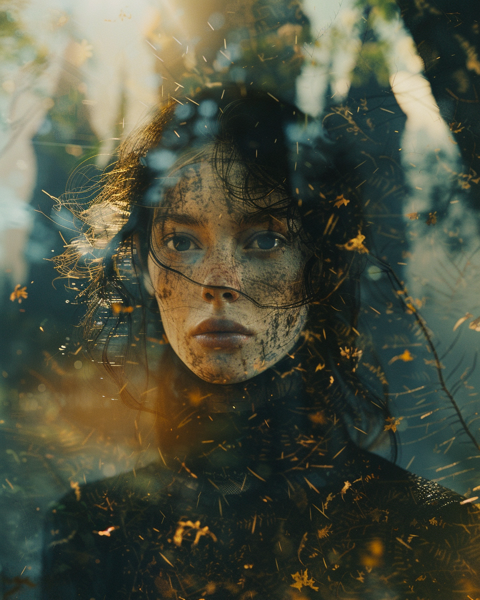
Emotion matters more than ever in AI driven creativity.
Emotion is not decorative.
It is not a finishing touch.
Emotion is direction. It is the creative compass.
In UX, we call this the “emotional layer” of design, the thread that ties intent to experience.
In AI art, emotional design becomes:
the mood we anchor the scene in
the inner truth we express through light and color
the symbolic cues that speak to human memory
the story the viewer steps into
The machine is neutral.
Emotion is what makes it human.
AI offers infinite output.
You decide which one has a soul.
Where Emotional Design and AI Art Converge

Where emotional design and AI art converge.
1. Emotional Storytelling Through Prompting
Emotion changes the entire structure of a prompt.
A neutral prompt describes what it wants to see.
An emotional prompt describes what it wants the viewer to feel.
For example, adding emotional vocabulary like:
“transformation”
“earned courage”
“arrival”
“rebirth”
“unspoken truth”
shifts the model out of ornamentation and into story.
As women, we’re particularly attuned to this because we create through connection — through symbolism, intuition, lived experience, and relational meaning.
2. Mood as a Design System
Mood is not an afterthought, it is the skeleton of the image.
Lighting becomes emotion.
Texture becomes memory.
Color becomes tone.
Composition becomes narrative direction.
AI responds beautifully when you treat mood like a design system.
If emotion is the heartbeat, mood is the pulse.
3. Imperfection as Humanity
AI defaults to perfection.
Humans remember imperfection.
Slight asymmetries, a stray hair, a shadow under the eye, grit in the fabric, a moment of vulnerability, these create emotional realism.
These micro-imperfections are the bridge between machine and humanity.
4. Identity, Memory & Personal Signature
AI does not know what you’ve lived.
But your decisions reveal it.
Your emotional themes: resilience, power, revelation, softness, triumph, are your creative fingerprint.
Your story becomes your signature.
Emotion becomes your authorship.
How I Translate Emotion Into My AI Art
For me, emotional design begins long before I type a prompt.
My entry point is always an emotional spark, a memory, a color I feel in my heart, a truth I’ve earned, or the moment of transformation I want someone else to feel.
I ask myself one question:
“What emotional truth am I trying to share so the viewer says, ‘Me too’?”
From there, I choose emotional vocabulary that mirrors that truth:
revelation
inner fire
arrival
rebirth
quiet courage
becoming
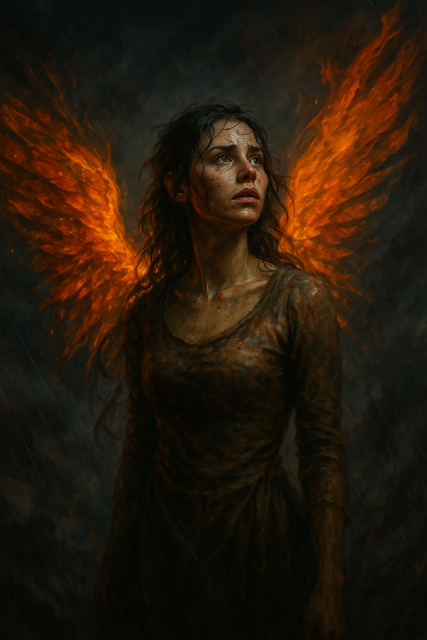
My art is always about transformation and triumph, the moment a woman steps out of the storm she once flew into and then, flies over it in victory.
To me, emotional design is about resonance, not decoration.
It’s about giving someone the feeling that they are not alone, that they recognize something in themselves through the art.
My Prompting Workflow

Here’s how I build an emotional prompt:
1. Start with the emotional truth
(“She rose anyway.”
“She discovered her own fire.”)
2. Choose the visual symbol
(wings, storms, castles, phoenix ash, rebirth color tones)
3. Layer mood + lighting
(cinematic glow, chiaroscuro tension, dawn-as-revelation)
4. Add micro-humanity
(imperfection, grit, softness, earned strength)
5. Refine the emotional vocabulary
until the soul of the image is undeniable.
Emotion isn’t the garnish,
it’s the architecture.
Use Emotional Design in Your Own AI Art Today
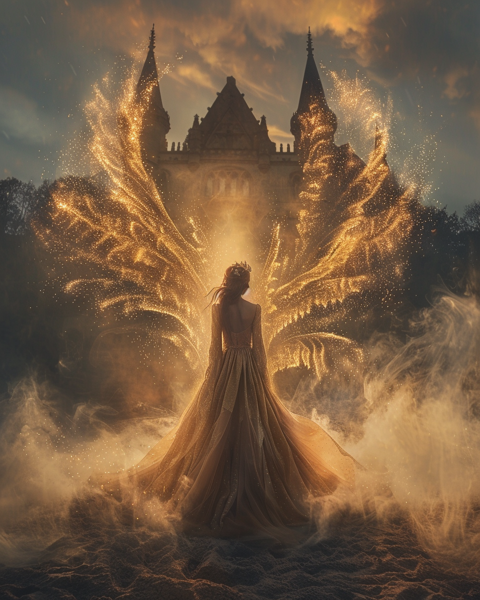
Here’s how anyone can bring more emotional depth into their AI work:
1. Start with the Feel, Not the Look
Ask:
“What do I want the viewer to feel when they look at this?”
2. Add Emotional Vocabulary
Use words like:
longing, transformation, discovery, arrival, renewal, inner fire, resilience, vulnerability.
3. Use Mood as a Design Element
Think of mood as a physical material.
Shape it through:
light
shadow
color
texture
composition
4. Choose a Symbol
One well-chosen symbol can carry an entire story:
a feather, a crack in stone, a glowing ember, a butterfly wing.
5. Add Intentional Imperfection
Ask the model for:
“subtle human imperfection,” “windblown hair,” “uneven fabric texture,” “weathered details.”
Imperfection is the doorway to humanity.
Try This Prompt: Bringing Your Humanity Into AI Art
Whatever it is, the way you tell your story online can make all the difference.
(Here’s my signature emotional prompt, refined for readers.)
“a woman rising from the storm she once flew into, her wings lit with the fire of every ‘you can’t’ she ever defied, cinematic emotional portrait, symbolic color, chiaroscuro lighting, raw human imperfection, mood-rich composition, ultra-fine detail, emotional storytelling at its core”
This is an open invitation for readers to express their own internal triumphs.
Creativity Evolves / Humanity Leads

AI doesn’t diminish human creativity, it amplifies it.
In the age of infinite images, the only thing that makes art matter is the human heart behind it.
When emotion guides the machine,
the output stops being “AI art”
and becomes simply art.
AUTHOR BIO
Wren Peak is a UX designer and AI visual storyteller who specializes in emotional design and narrative-driven digital art. Her work explores themes of resilience, transformation, and feminine strength using AI as a canvas for human truth. She brings a deeply intuitive, human-centered approach to every image she creates.