Sheba’s Silhouette: Honouring Ethiopian Heritage Through AI-Inspired Couture
Fashion has always been a way of preserving culture while imagining the future. With Sheba’s Silhouette, my goal was to explore how emerging technologies such as artificial intelligence can help reinterpret cultural heritage while still honoring the traditions that inspire it.
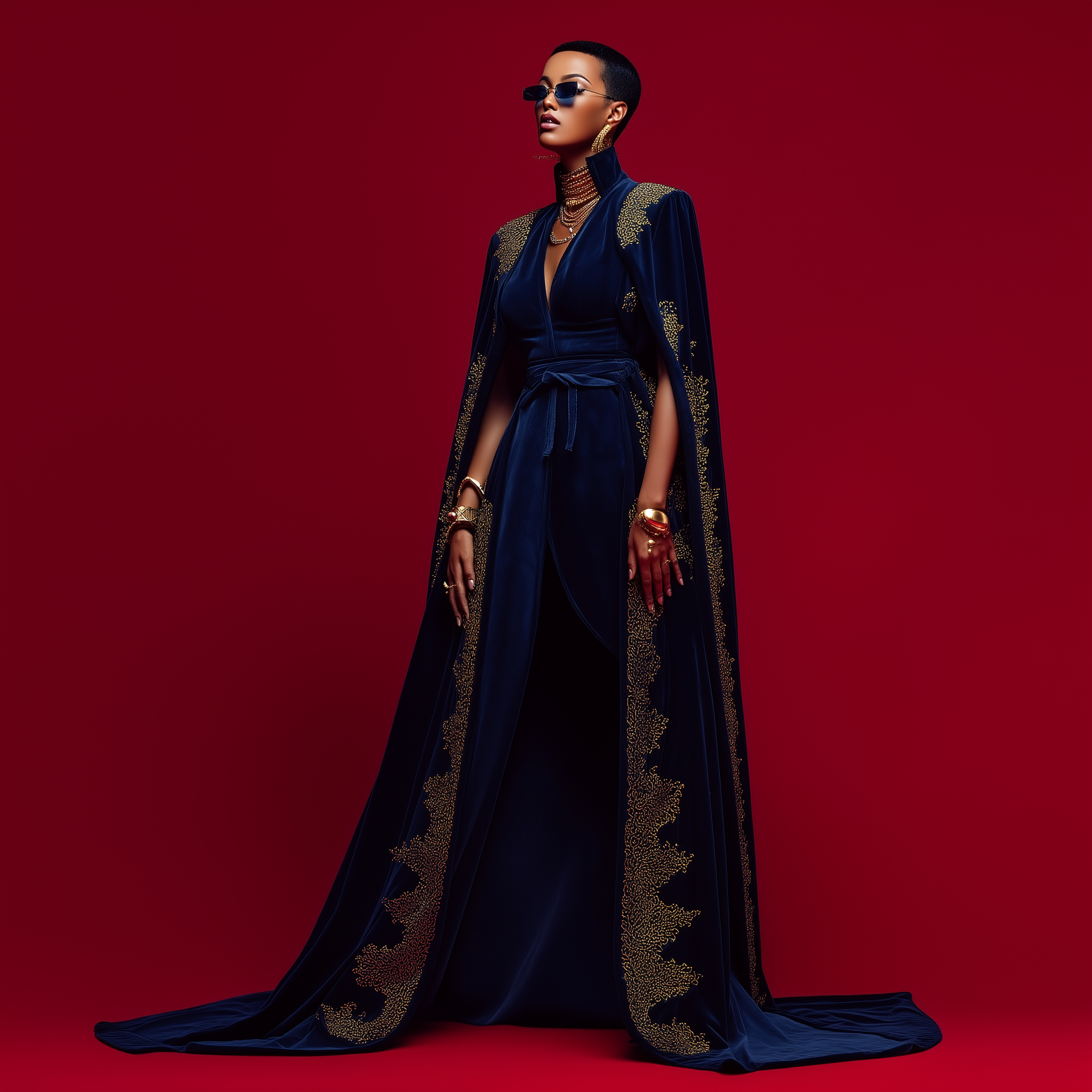
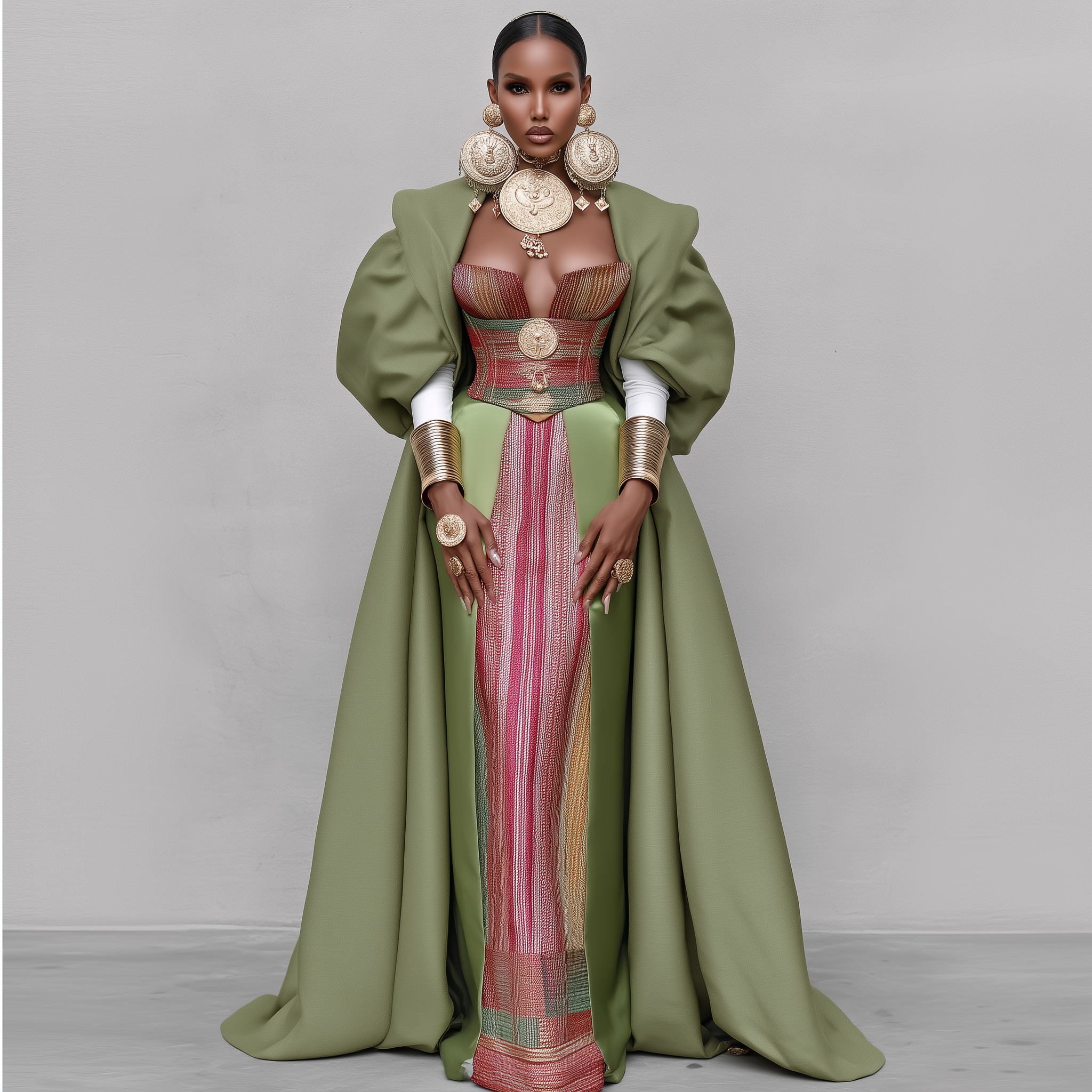
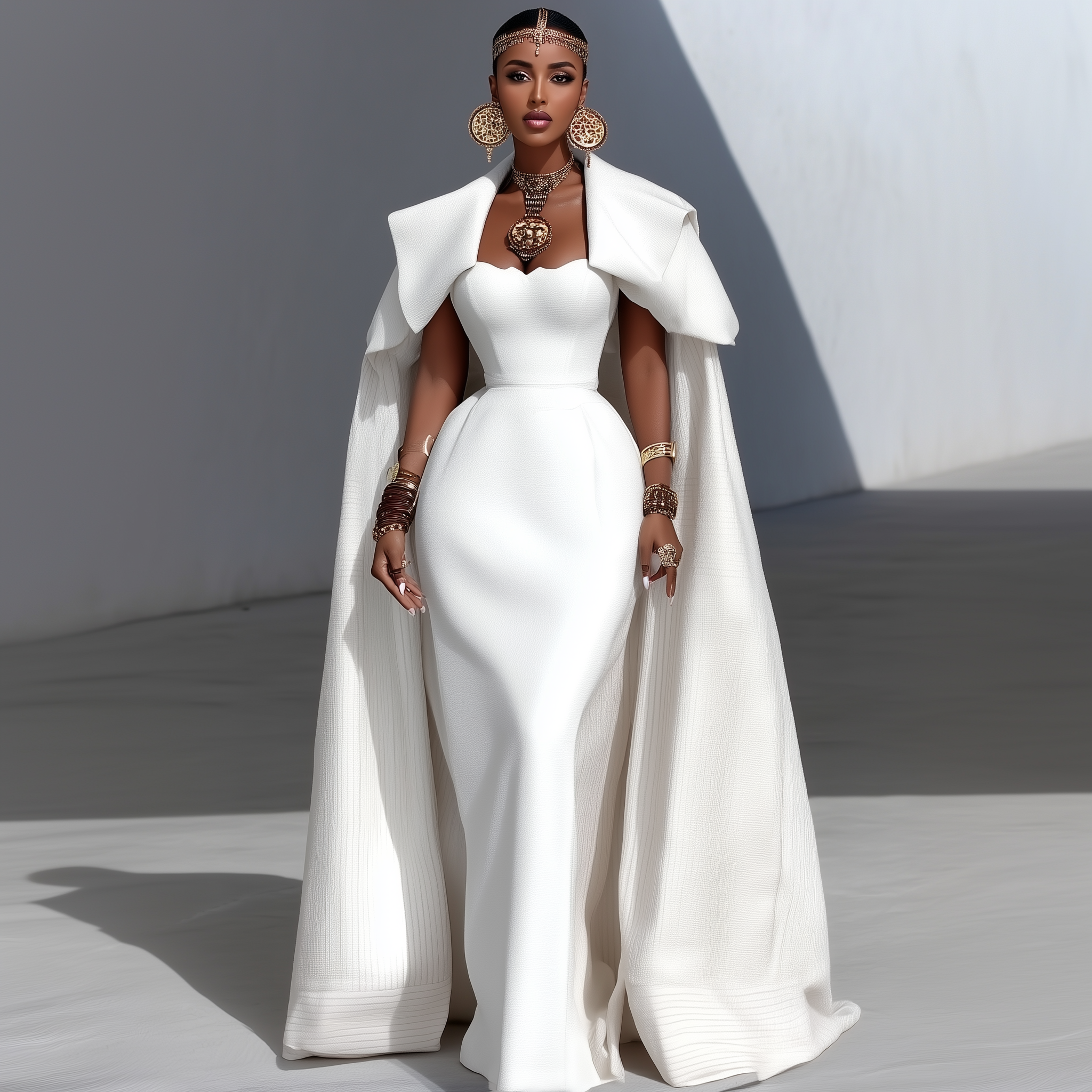
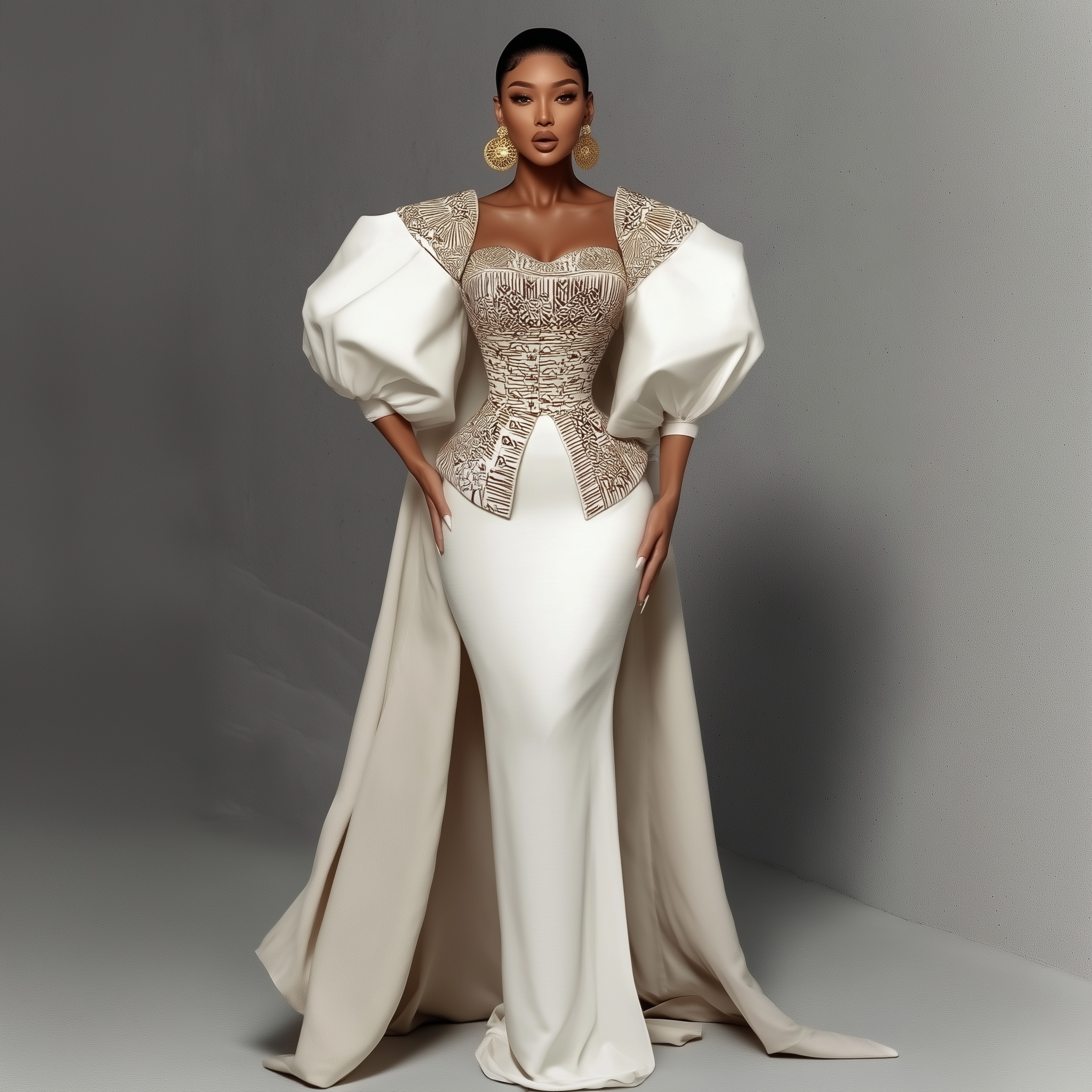
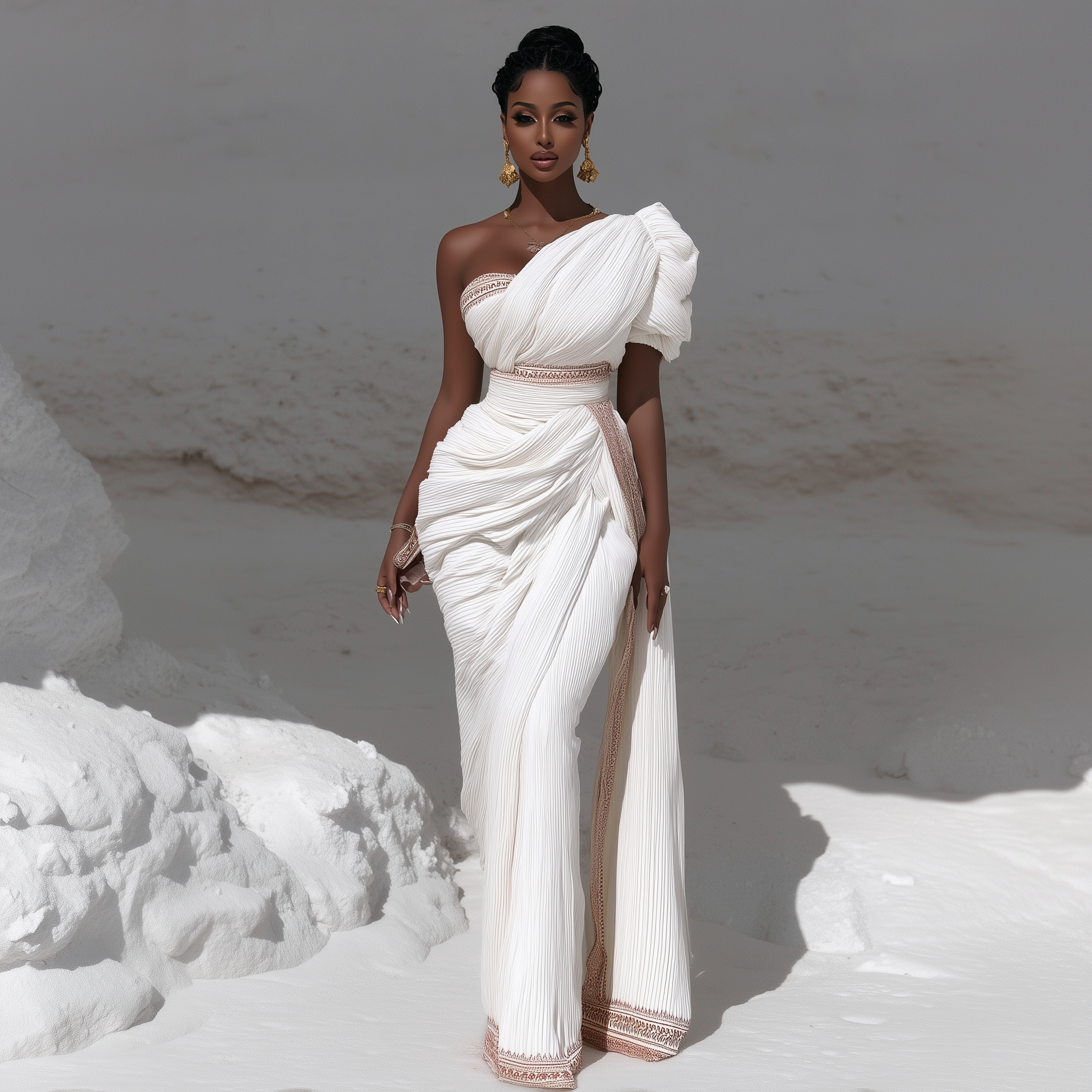
Sheba’s Silhouette is a fashion collection inspired by historical cultural concepts that explores how traditional garments and textiles can be reimagined through contemporary design and AI-assisted creative workflows. The project reflects an interest in how fashion, technology, and cultural storytelling intersect within modern design practices.
Rather than recreating traditional garments exactly as they exist, the collection explores how elements of Ethiopian design can evolve into new silhouettes and forms while maintaining their cultural significance.
Cultural Inspiration
The inspiration for this collection comes from two important elements of Ethiopian tradition: the Kaba and the Gabi.
The Kaba is a traditional Ethiopian ceremonial robe historically associated with royalty and worn during significant cultural occasions such as weddings and religious ceremonies. Known for its flowing structure, layered draping, and regal presence, the Kaba represents elegance, and status.
Several designs within the collection reinterpret the silhouette and ceremonial presence of the Kaba, translating its dramatic structure into contemporary couture garments. Sculptural sleeves, flowing layers, and structured bodices draw inspiration from the visual elegance of traditional attire.
Alongside the Kaba-inspired pieces, the collection also includes designs inspired by the Gabi.
The Gabi is a traditional Ethiopian handwoven cotton blanket known for its warmth, craftsmanship, and distinctive woven texture. In this collection, the Gabi is reimagined as a material for fashion design. Rather than remaining a blanket, the textile becomes the foundation for dresses and contemporary garments that transform a traditional fabric into modern fashion pieces.
The Creative Process
The creative process for Sheba’s Silhouette began with research and visual exploration. As someone with Ethiopian roots, my own cultural background and family history also played an important role in shaping the inspiration behind the collection.
I started by building a curated Pinterest inspiration board that included references related to Ethiopian garments, traditional textiles, color palettes, and silhouette ideas. This research helped establish the visual direction of the collection and guided the development of the designs.
From there, the concepts evolved through experimentation and digital exploration.
Rather than replicating traditional garments directly, I focused on interpreting their design language through ceremonial silhouettes and the structure of traditional garments, while also drawing inspiration from the craftsmanship found in Ethiopian textile tradition.
The goal was to translate these elements into contemporary fashion pieces that reflect both history and modern designs.
Technology and AI in the Design Process
Artificial intelligence played a role in the design process, but it functioned as a creative tool rather than a replacement for the designer.
AI-assisted tools such as Midjourney and ChatGPT were used to help explore visual concepts and expand the ideation process during the development of the collection. By working with curated visual references and training the AI model to align with the aesthetic direction of the project, I was able to experiment with different silhouettes, textures, and stylistic interpretations inspired by Ethiopian cultural heritage.
Generative tools helped visualize potential designs and explore variations quickly, allowing ideas to evolve through iteration and creative direction. While AI supported the exploration phase, the cultural inspiration, design decisions, and overall creative vision remained guided by human design.
In this way, technology became a collaborator in the creative process, helping expand possibilities while allowing the designer’s perspective and storytelling to remain at the center of the work.
Fashion, Technology, and Spatial Design
One of the ideas that interests me most is the intersection between fashion, architecture, and emerging technologies.
Garments, like architecture, are structures that shape how people move through space. When fashion is explored through digital design tools and emerging technologies, the boundaries between fashion, architecture, and spatial design begin to blur.
Design concepts can exist not only as physical garments but also as digital fashion pieces that live in virtual environments, immersive platforms, or future design workflows.
These technologies allow designers to experiment with form, structure, and materials in new ways that expand how fashion can be imagined and experienced.
What the Collection Represents
Sheba’s Silhouette reflects an exploration of history, reinterpretation, and cultural identity.
Ethiopian garments and textiles carry deep historical meaning and craftsmanship. By exploring these traditions through digital design and AI-assisted tools, the collection reflects how culture can inspire new forms of creative expression.
The designs celebrate centuries of craftmanship while imagining how these traditions might evolve within a technologically connected future.
Looking Forward
As technology continues to transform creative industries, the relationship between fashion, artificial intelligence, and digital design will continue to evolve. AI tools and digital platforms are creating new opportunities for designers to experiment, visualize ideas quickly, and explore creative directions that may not have been possible through traditional workflows alone.
Looking forward, I hope to continue exploring how extended reality (XR), including virtual and augmented reality, can expand how fashion is designed and experienced. Immersive technologies create opportunities for garments to exist not only as physical pieces, but also within digital environments and spatial experiences, where fashion can interact with architecture, storytelling, and virtual spaces.
For me, Sheba’s Silhouette represents an early exploration of how tradition, technology, and design can intersect, opening new possibilities for how fashion can be created, interpreted, and experienced in the future.
___________________________
About the Author
Zewditu Mered is an immersive technologist and designer exploring the intersection of artificial intelligence, spatial computing, and digital creativity. Her work sits at the convergence of architecture, fashion, and emerging technologies, where she designs interactive experiences across web, mobile, and Extended Reality (XR) platforms that bridge the physical and digital worlds.
With a background in software systems and quality engineering, Zewditu brings a systems-thinking approach to creative experimentation. Her research and practice focus on how AI and immersive technologies are reshaping industries such as fashion, architecture, and media, enabling new forms of storytelling, design, and cultural expression.
Through projects like Sheba’s Silhouette, she explores how heritage, identity, and advanced technologies can coexist, reimagining traditional design through the lens of digital innovation.
Explore more of her work at: https://www.zewditu.com